Introducing Japanese Cinema: Part 1
Sit down, relax and enjoy a slow perusal of part 1 of our list of essential Japanese Cinema (Part 1) handpicked by a member of the team.
Japanese cinema spans more than a century, from silent-era experiments to anime landmarks and everything in between, and it can be hard to know where to begin.
We’ve curated a handpicked set of films, grouped by mood and style, to give you a way in, whether you’re curious about the New Wave, up for something wild, or in a kaiju kind of mood. There’s no need to tick them all off. Pick one that catches your eye, take your time with it, and let it lead you on to the next. If some of these are old favourites, we hope you’ll enjoy returning to them, and if they’re all new to you, even better.
Here are the top picks from The Tyneside’s own David Spittle.
Top 5 New Wave
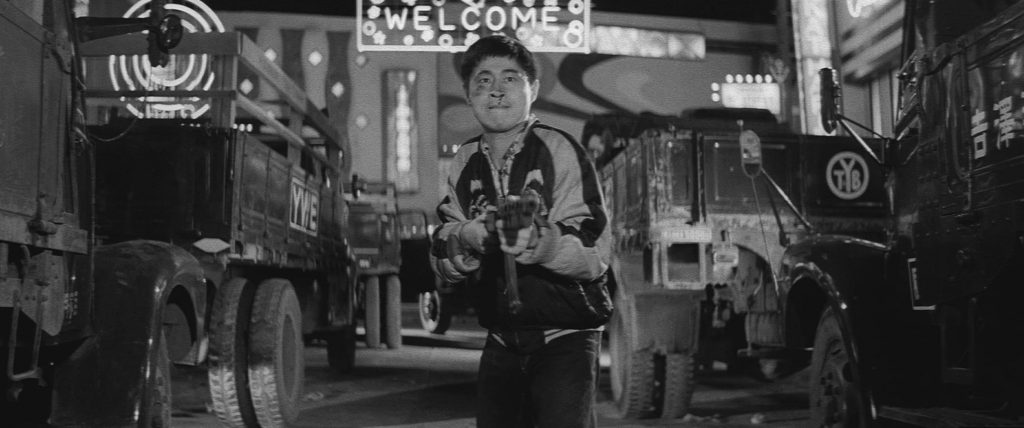
From the late 1950s through to the 1970s a disparate and inventive group of directors were challenging the traditional forms and content of cinema that had gone before in order to explore new visual techniques alongside provocative subject matter.
- Pigs and Battleships (Shōhei Imamura, 1961)
- Funeral Parade of Roses (Toshio Matsumoto, 1969)
- Death by Hanging (Nagisa Ōshima, 1968)
- Crazed Fruit (Kō Nakahira, 1956)
- Woman in the Dunes (Hiroshi Teshigahara, 1964)
Top 5 Wild & Surreal

Japan has a rich history of avant-garde, underground and extravagantly bizarre film: from works that splice genre acrobatics with breakneck tonal shifts, to more conceptually experimental fever dreams… inspired madness awaits!
- Pastoral: To Die in the Country (Shūji Terayama, 1974)
- Hausu (Nobuhiko Obayashi, 1977)
- Horrors of the Malformed Men (Teruo Ishii, 1969)
- Franz Kafka’s A Country Doctor (anime short, dir. Kōji Yamamura, 2007)
- Tetsuo: Iron Man (Shinya Tsukomoto, 1989)
Top 10 Kaiju

From the city-stomping metaphor of Godzilla to an ever-widening roster of rampaging monsters, these eclectic creature features encompass political commentary, mad fantasy, costume lunacy and a generously bludgeoning quantity of destruction. Selection contributed by the writer and scholar, Dr. Alex Adams.
- Godzilla, Mothra, King Ghidorah: Giant Monsters All-Out Attack (Dir. Shusuke Kaneko, 2001)
- Shin Godzilla (Dir. Hideaki Anno & Shinji Higuchi, 2016)
- Godzilla (Dir. Ishiro Honda, 1954)
- Gamera 3: Revenge of Iris (Dir. Shusuke Kaneko, 1999)
- Daimajin (Dir. Kimiyoshi Yasuda, 1966)
- War of the Gargantuas (Dir. Ishiro Honda, 1966)
- Godzilla Vs Biollante (Dir. Kazuki Ohmori, 1989)
- Mothra (Dir. Ishiro Honda, 1961)
- Big Man Japan (Dir. Hitoshi Matsumoto, 2007)
- Ebirah, Horror of the Deep (Dir. Jun Fukuda, 1966)
Top 5 Horror
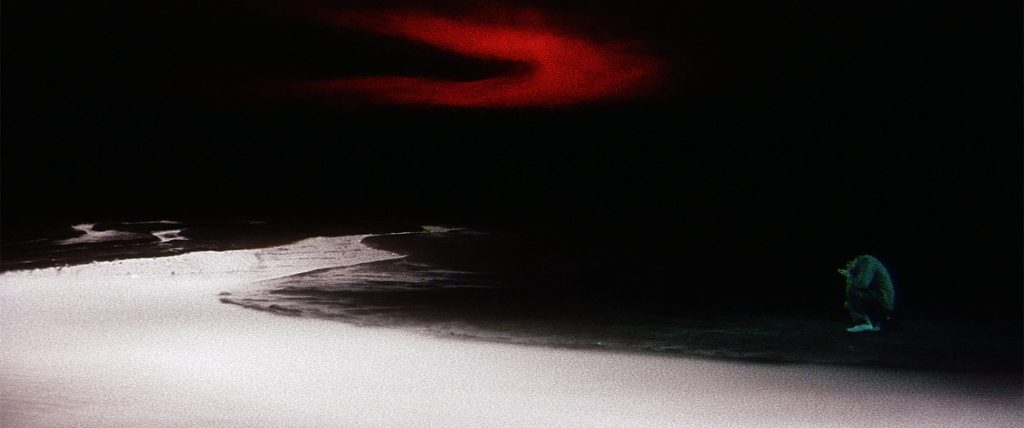
Japan’s cultural history has always been imaginatively alive to the supernatural and grotesque, providing a fertile environment for truly extraordinary horror cinema. Whether it’s the folkloric enchantment of ghosts, cyber fears and posthumanism, or the psychosexual extremity of arthouse nightmares, the diversity and wealth of Japanese horror cinema is truly staggering.
- Jigoku (Nobuo Nakagawa, 1960)
- Kwaidan (Masaki Kobayashi, 1964)
- Audition (Takashi Miike, 1999)
- Pulse (Kiyoshi Kurosawa, 2001)
- Onibaba (Kaneto Shindo, 1964)
Top 5 Philosophical

These are films that bring an intellectual, contemplative or meditative sensibility to profound questions of existence.
- The Human Condition Trilogy (Masaki Kobayashi,1959-1961)
- Zigeunerweisen (Seijun Suzuki, 1980)
- After Life (Hirokazu Koreeda, 1998)
- Eros + Massacre (Yoshishige Yoshida, 1970)
- This Transient Life (Akio Jissoji, 1970)
Top 5 Classics

Does what it says on the tin: a primer of all-time greats to enjoy!
- Tokyo Story (Yasujirō Ozu, 1953)
- A Page of Madness (Teinosuke Kinugasa, 1926)
- Rashomon (Akira Kurosawa, 1950)
- Harakiri (Masaki Kobayashi, 1962)
- Spirited Away (anime, Hayao Miyazaki, 2001)
Top 5 of the Twenty First Century

As an evolving frontier of contemporary film, Japan continues to be one of the most exciting, challenging and diverse – here are some more recent highlights.
- Shoplifters (Hirokazu Koreeda, 2018)
- One Cut of the Dead (Shinichirou Ueda, 2017)
- Harmonium (Kōji Fukada, 2016)
- Mind Game (anime, Masaaki Yuasa, 2004)
- Love Exposure (Sion Sono, 2008)
Read our Introduction to Japanese Cinema Part 2 and visit our official Letterboxd for the full list.